To the 100th anniversary of Russian weightlifting
The Centenary of Russian Weightlifting; Vladislav Frantsevich Kraevsky
English summary of Tyazhelaya Atletika. Ezhegodnik 1985 (Moscow: Fizkultura i Sport, 1985), pp. 3–5: the text is paraphrased, not translated; figures are the original images.
A hundred years of Russian weightlifting
Soviet weightlifting marks its centenary in 1985. A century ago the St Petersburg physician V. F. Kraevsky founded a circle of amateurs that soon produced athletes able to meet foreign rivals on equal terms; by 1900 similar circles existed in Moscow, Riga, Kiev, Tiflis, Reval, Ufa, Odessa, Kursk and elsewhere. Before the Revolution the sport had no state help, and Russia entered the world championships only three times.
Under Soviet power lifters stood in the vanguard of physical culture from the start: at the Moscow championship of December 1917 A. Bukharov exceeded world records. Regular USSR championships began in 1933, and before the war a generation of strong men set national and world records, among them G. Popov, L. Mekhanik, N. Shatov, Ya. Kutsenko, S. Ambartsumyan, I. Maltsev, A. Bozhko, N. Koshelev, R. Manukyan, V. Krylov, D. Polyakov and G. Novak. In the Great Patriotic War the best lifters fought with the whole nation, and many, including M. Gromov, A. Donskoy, D. Ekht, Ye. Lopatin, N. Saksonov, Yu. Duganov, N. Laputin, R. Roman, V. Svetilko, Shatov, Mekhanik and Bukharov, won decorations.
The USSR federation joined the international body in 1946, and Novak became the first Soviet world champion. The national team has since won the Olympic Games six times, the world championships 25 times (127 individual titles) and the European championships 30 times, with over 1000 world records. Thirty Soviet lifters are Olympic champions; A. Vorobyov, L. Zhabotinsky and V. Alekseyev won twice. Recent successes are linked with D. Rigert, K. Osmonaliev, N. Kolesnikov, Alekseyev, S. Rakhmanov, Yu. Sarkisyan, O. Mirzoyan, Yu. Vardanyan, L. Taranenko, A. Gunyashev, Yu. Zakharevich, V. Solodov and P. Kuznetsov. Its prestige also rests on the federation's unselfish help to lifters abroad. Over a million people now practise weightlifting, kettlebell sport or athletic gymnastics; centenary events are planned for 1985.
Vladislav Frantsevich Kraevsky
In 1885 Kraevsky founded Russia's first weightlifting circle, in St Petersburg, and led it for many years; pupils and contemporaries rightly called him the father of Russian athletics.
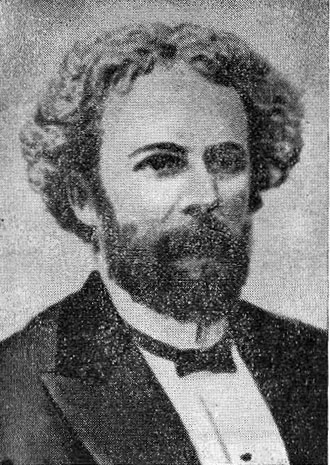
His pupil, the world champion G. G. Gakkenshmidt, devoted a chapter of The Road to Strength and Health (Moscow, 1911) to him as a noble man, outstanding physician and teacher, but says nothing of his life before 1896, and other data are scattered and sometimes inaccurate; the authors therefore studied his service record in the Central State Historical Archive of the USSR.
Kraevsky was born in Warsaw on 29 July 1841 into a hereditary Polish noble family without estates, and graduated in medicine at Warsaw University. Qualified in July 1865, he moved to St Petersburg as a district doctor and fought the 1866 cholera epidemic. He became a resident physician at the Maximilian clinic in 1867 and moved to the Kalinkin hospital in 1869, when he also became a supernumerary physician to the Directorate of Imperial Theatres; in 1870 he joined the Ministry of the Interior's medical department as a junior official, keeping the theatre post. On leave abroad he studied physical education in Austria-Hungary, Germany, Italy and Spain, above all exercise for preventing and treating disease.
From 1880 to 1889 he ran a large private practice and combined it with scientific and public work: board member of the Russian Society of Experimental Psychology, leader of the weightlifting circle and later chairman of the St Petersburg Bicycle and Athletic Society. Visiting athletes gathered at his home, where he fitted out a training hall, and he supported his pupils financially. The circle drew the historian N. P. Likhachev, the painters I. G. Myasoyedov and N. I. Kravchenko and the actors V. N. Davydov and K. A. Varlamov; pupils such as Gakkenshmidt, S. Yeliseyev and G. Meyer soon became world-famous, and others, notably Count G. I. Ribopier, led athletic organisations themselves.
His knowledge of medicine, psychology and exercise methods made him the acknowledged leader of lifting and wrestling. He promoted the sport, organised competitions and lifted himself; at the first world championships in Vienna (1898) he chaired the jury and afterwards astonished onlookers with his globe-barbell results for his age. His example and his pupils' achievements spread circles and clubs to Moscow, Ufa, Voronezh, Reval, Riga, Odessa, Tiflis, Tver and elsewhere.
In 1896–1899 he wrote two main works. A Catechism of Health: Rules for Those Who Practise Sport was passed by the censors on 9 December 1899 but survives only in manuscript, perhaps because his other book, The Development of Physical Strength Without and With Kettlebells (approved 25 May 1899), was then going to press. It appeared in 1900 and was reprinted in 1902, 1909 and 1916. He stressed therapeutic gymnastics and proposed a commented "Scheme of Medical-Gymnastic Procedures", praised Swedish gymnastics for its therapeutic role and approved Gustav Zander's apparatus.
He backed P. F. Lesgaft's search for a rational, consistent method, writing that Swedish gymnastics lacks a strict scientific basis, whereas Lesgaft's system offers detailed principles of the anatomy and physiology of the organs of movement and a rational transition from simple to complex exercises. Many of his recommendations remain valid: compulsory medical supervision, regular training with progressive load, all-round development, hardening, hygiene and daily routine, no alcohol or smoking, correct breathing and ways of fighting fatigue. "The theory of heredity is not an empty sound", he wrote: systematic, sensible training makes us parents of strong, healthy children.
In September 1900 Kraevsky returned from abroad full of plans, but in October he fell on the Anichkov Bridge and broke his leg, and died of a stroke on 1 March 1901. He was buried in the Vyborg Catholic cemetery. His name lives on in textbooks and fiction, and Leningrad holds an annual weightlifting and classical wrestling tournament for the Kraevsky prize.